Kasthoori Kannada: Personalities
Showing posts with label Personalities. Show all posts

Sunday, July 17, 2011

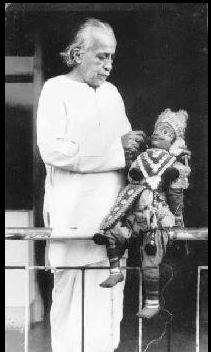
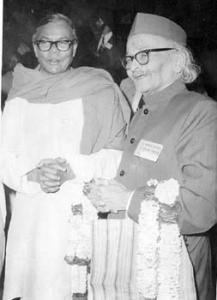
Personalities - Shivaram Karanth

Kota Shivaram Karanth
Popularly know as Shivaram Karanth 


Brief Information:

Born : 10th October, 1902
Place : Kota, Saligrama, Udupi district, Karnataka

Father's Name : Shesha Karantha
Mother's Name : Lakshmamma

Wife Name : Leela Karanth
Marriage Date : 1932
Children : Ullas Karanth (son)

Died : 9th December,1997
Age when died : 95 Years
Place : Manipal, Udupi district, Karnataka

Early Life  
  • Shivaram Karanth was the younger brother of politician K. R. Karanth who served as minister in the Madras Presidency in the 1940s.
Education
  • Completed primary education in Kundapura and Mangalore
  • Was influenced by Gandhi's principles and took part in Indian Independence movement in college
  • Left degree half way to participate in the Non-cooperation movement
Career
  • Worked for khadi and swadeshi for five years, till about 1927. By that time Karanth had already started writing fiction-detective novels, to begin with — as well as plays
Works
  • Was an intellectual and environmentalist who tremendously contributed to art and culture of Karnataka
  • Considered one of the greatest novelist in Kannada
  • Some of the novels like Marali Mannige, Bettada Jeeva, Alida Mele, Mookajjiya Kanasugalu and Chomana Dudi are widely read and continue to be discussed even today
  • Other novels like Mai Managala Suliyalli, Ade OOru Ade Mara, Shaneeshwarana Neralinalli, Kudiyara Koosu, Svapnada Hole, Sarsammana Samadhi are also very good novels and of all the novels, Marali Mannige is considered the best
  • Wrote 47 novels in all and is said to have tried to write at least one novel per year
  • Contribution to revival of Yakshagana will forever be remembered
  • Yakshagana-Bayalata (1957) in Kannada, and Yakshagana(1975) are two books on Yakshagana
  • The first person to do some serious research in Yakshagana, collecting old Prasangas, searching the roots of yakshagana, its musical heritage etc
  • Tried to revive this medieval semi-folk art and made some experiments in Yakshagana using Ballet and other modern form of dances
  • Took Yakshagana troops to European countries, a unique effort in those days
  • Made experiments in printing during 1930 - 40s and printed his own novels, but incurred serious financial losses
  • Interestingly, earlier novels have cover pages of art work made by himself and this fact, that the novelist drawing the cover page of his own books may be a unique record in modern literature
  • At the age of 95, wrote a book on birds (published during 2002 by Manohara Grantha Mala, Dharwad) and this may also be a world record of some sorts (for having written a book at that ripe age)
  • Was a prolific writer. Apart from the 47 novels, also wrote 31 plays, 4 short stories, 6 books of essays and sketches, 13 books on art, including a history of world art in Kannada and a work on Chalukyan sculpture and architecture, a standard treatise on the Yakshagana (with which dramatic form, his name is identified), a 3 volume book of knowledge for children, a 4 volume encyclopedia on science for grown ups, 240 children's books, 6 books on travel, 2 books on birds, 3 Travelogues, an autobiography
  • The list is incomplete. Dr. Karanth has 417 books to his credit, which fact may be a unique record for any noted important writer in India and this fact is a less publicized one
Conservation work
  • Rescued 2 tiger cubs from starvation when their mother was killed by poachers
  • Experimentally built the first children's toy-train in Asia which was later copied in Cubbon Park, Bangalore
  • Ullas Karanth (son) continues his work in the field of environmentalism with an internationally acclaimed body of research into the ecology, biology and future of the tiger in India
Politics
  • Plunged into Politics once but was defeated in the Parliament election from Canara Constituency
Honours
  • Has credit of around 87 books written by renowned authors on him
  • The only person in Asia on whom so many books have been written
  • Bhargava of the Coast
  • Mobile Encyclopaedia
  • As President of the thirty seventh Karnataka Literary conference held at Mysore in 1955
  • Honorary doctorates of Mysore and Karnataka universities 
Awards
  • Padma Bhushan - Returned his Padma Bhushan honor in protest against the Emergency, imposed by Indira Gandhi.
  • Sahitya Academy award - 1958
  • Pampa Award
  • Tulsi Samman
  • Swedish Academy award
  • Jnanpith Award - 1978
  • An institution, "Center of Advanced Studies", was established in his name at Mangalore University in 1990.
        And many more

Books written 
  • Mookajjiya Kanasugalu - dreams of a silent granny (Jnanpith award winning novel)
  • Marali Mannige - back to the soil
  • "Chomana Dudi" - drum of choma
  • "Apoorva Paschima" - Incomparable West - A Travelogue
  • "Abuvinda Baramakke" - A Travelogue
  • "Arasikaralla" - A Travelogue
  • "Mai Managala Suliyalli" - in the whirlpool of body and soul
  • "Bettada Jeeva" - life on the hills
  • "Sarasammana Samadhi" - grave of sarasamma
  • "Dharmayana Samsara" - family of Dharmayana
  • "Alida Mele" - after death
  • "Kudiyara Kusu" - infant of kudiya
  • "jnana" - ( Knowledge )
  • "mailikallinodane matukate" - Talks with the milestone ( small stories)
  • "adbhuta jagattu" - wonderful world ( science)
  • "vijnana prapancha" - The World Of Science ( science)
  • "Kaladarshana" - Book on Art with hundreds of photo/pictures.
  • Yaksagana, English transln., Indira Gandhi National Centre for the Arts (1997)
  • Yakshagana Bayalata Pub by Mysore University
  • Bharatheya chitrakale
  • "Hucchu Manasina Hatthu Mukhagalu", autobiography, English translation: "Ten Faces of a Crazy Mind", by H Y Sharada Prasad), Bharatiya Vidya Bhavan 1993,
  • "Chiguridha Kanasu"
  • "Mugida Yudda" - Completed war
  • "Moojanma"
  • "Dharmarayana samsara"
  • "Kevala Manushyaru"
  • "Illeyamba"
  • "Iddaru chinthe"
  • "Navu kattida swarga"
  • "Nashta diggajagalu"
  • "Kanniddu kurudaru"
  • "Gedda doddasthike"
  • "Kannadiyalli kandatha"
  • "Antida aparanji"
  • "Halliya hattu samastharu"
  • "Sameekshe"
  • "Moga Padeda Mana"
  • "Shaneeshwarana Neralinalli"
  • "Sameekshe"
  • "Nambidavara Naka Naraka"
  • "Kambaniya Kuyilu"
Movies
  • Chomana Dudi
  • Chigurida Kanasu
  • Maleya Makkalu (from Kudiyara Koosu Novel)


If anyone finds any mistake or any more information can be added or any of the photos to be removed please mail to kasthoorikannada@gmail.com. Please note that the above article is collection of many sources

    Saturday, July 16, 2011

    Personalities - Dattatreya Ramachandra Bendre

    Dattatreya Ramachandra Bendre
    Popularly know as Ambikatanayadatta 


    Brief Information:


    Born : 31st January, 1896
    Place : Dharwad, Karnataka

    Father's Name :
    Mother's Name : Ambika
    Wife Name : Laxmibai
    Marriage Date : 1919
    Children : Two sons Panduranga and Vamana and daughter Mangala

    Died : 21st October, 1981
    Age when died : 85 Years
    Place : Mumbai, India
    Early Life
    • Born on into a Chitpavan Brahmin family at Dharwad in Karnataka
    • Grand father was a Dasagranthi (Master of ten volumes of sacred lore) and scholar in Sanskrit classical literature
    • Father was also a Sanskrit scholar
    • Father died when Dattatreya was only 12 years old
    • Adopted the pen-name of Ambikatanayadatta (literally means Datta, son of Ambika after his mother)
    • Mother ran a Khanavali or eatery to feed the family
    • Education
    • Completed primary and high school education in Dharwad with uncle's help
    • Completed matriculation in 1913
    • Joined the Fergusson College, Pune for higher education.
    • After obtaining degree returned to Dharwad and started teaching at Victoria high school
    • Obtained Master of Arts degree in 1935
    Career
    • Started career as a teacher at Victoria high school in Dharwad
    • Worked as a professor of Kannada in D.A.V. College Solapur (1944 – 1956)
    • Was appointed an advisor for All India Radio's Dharwad station.in 1956
    • Later life
    • Formed the Geleyara Gumpu (Group of Friends) in 1922
    • Geleyara Gumpu was mainly intended as a peer group for the study of culture and literature, this friends' circle drew poets, writers and intellectuals from different parts of Karnataka including Ananda Kanda, Sham. Ba. Joshi, Siddavanahalli Krishna Sharma, Enke, G.B.Joshi, Krishnakumar Kallur, V. K. Gokak and R. S. Mugali
    • Started the cultural movement Nada-habba, a celebration of the land and its culture which is still prevalent in Karnataka in 1926
    • Nada-habba is celebrated during the navaratri
    • Was sentenced to imprisonment for writing Nara Bali (Human Sacrifice), which was then branded seditious in 1932 Bendre
    • Was under house arrest in Mugad village
    • Presided over the 27th Kannada Sahitya Sammelana held at Shimoga in 1943
    • Went on to become a fellow of the Kannada Sahitya Parishat
    • The Government of Karnataka produced a documentary on his life in 1972
    • Film director and playwright Girish Karnad made a Kannada documentary film, D. R. Bendre on his life and work in 1972. It was produced by The Government of Karnataka
    Awards and honors
    • President of the 27th Kannada Sahitya Sammelana of Shimoga in 1943
    • Awarded honorary doctorate by the University of Mysore and Karnataka
    • Sahitya Academy award - 1958
    • Kelkar prize - 1965
    • Padma Shri – 1968
    • Fellowship of Sahitya Academy – 1968
    • Honoured with the Central Sahitya Akademi 's award
    • Jnanpith Award - 1974 (For the collection of poems Naaku Tanti)
            And many more

    Poetry Collections
    • Krishnakumari (1922)
    • Gari (1932)
    • Moorthi mattu Kamakastoori (1934)
    • Sakheegeeta (1937)
    • Uyyale (1938)
    • Nadaleele (1940)
    • Meghadoota (1943)
    • Haadu Paadu (1946)
    • Gangavatarana (1951)
    • Krishnakumari mattu Haadu Paadu (1956)
    • Sooryapana (1956)
    • Hridayasamudra (1956)
    • Muktakantha (1956)
    • Chaityalaya (1957)
    • Jeevalahari (1957)
    • Aralu Maralu (1957)
    • Namana (1958)
    • Sanchaya (1959)
    • Uttarayana (1960)
    • Mugilamallige (1961)
    • Yaksha Yakshi (1962)
    • Naku Tanti (1964)
    • Maryade (1966)
    • Shrimata (1968)
    • Baa Hattara (1969)
    • Idu Nabhovani (1970)
    • Vinaya (1972)
    • Matte Shravana Bantu (1973)
    • Olave Namma Badaku (1977)
    • Chaturokti (1978)
    • Paraki (1982)
    • Kavyavaikhari (1982)
    • Balabodhe (1983)
    • Ta Lekkaniki Ta Dauti (1983)
    • Chaitanyada Puje (1983)
    • Pratibimbagalu (1987)
    • Shravana Pratibhe (1987)
    • Kuniyonu Baa (1990)
    Plays
    • Tirukara Pidugu (1930)
    • Uddhara (1930)
    • Nageya Hoge (1931)
    • Hucchatagalu (1935)
    • Hosa Samsara mattu Itara Ekankagalu (1950)
    • Ambikatanayadatta Nataka Samputa (1982)
    Essay 
    • Nirabharanasundari (1940)
    Criticism
    • Sahitya mattu Vimarshe (1937)
    • Sahityasamshodhana (1940)
    • Vicharamanjari (1945)
    • Kavi Lakshmishana Jaimini Bharatakke Munnudi (1954)
    • Maharashtra Sahitya (1959)
    • Kannada Sahityadalli Nalku Nayakaratnagalu (1968)
    • Matella Jyotu (1972)
    • Sahityada Viratsvaroopa (1974)
    • Kumaravyasa (1979)
    • Matadharma mattu Adhunika Manava (1979)
    Edited works
    • Nannadu Ee kannada Nadu (1928)
    • Hakki Haruthide (1930)
    • Chandrahasa (1948)
    • Hosagannada Kavyashree (1957)
    • Kanakadasa Chaturshatamanotsava Samsmarana - Samputa (1965)
    Works in Other Languages and Translations
    • A Theory of Immortality (1977)
    • Santa Mahantancha Poorna Shambhu Vitthal (1963)
    • Samvad (1965)
    • Vittala Sampradaya (1984)
    • Hosagannada Kavyashree (1957)
    • Shantala (1972)
    • Upanishadrahasya by R.D. Ranade (1923)
    • Bharatiya Navajanma "The Indian Renaissance" by Sri Aurobindo (1936)
    • Sri Aravindara Yoga Ashrama mattu Tatvopadesha (1947)
    • Kabira Vachanavali (1968)
    • Bhagnamoorthi Tr. of Anil's Marathi poem (1972)
    • Guru Govindasingh Tr. of Harbans Singh's book
    • Noorondu Kavanagalu Tr. of Tagore's poems ed. by Humayun Kabir


    If anyone finds any mistake or any more information can be added or any of the photos to be removed please mail to kasthoorikannada@gmail.com

    Thanks for http://kannadakavi.com/ for the rare photos of Da.Ra.Bendre

    Source:
    http://en.wikipedia.org/wiki/D._R._Bendre
    http://kannadakavi.com/

    Saturday, July 9, 2011

    Personalities - Kuvempu

    Kuppali Venkatappagowda Puttappa (ಕುಪ್ಪಳ್ಳಿ ವೆಂಕಟಪ್ಪಗೌಡ ಪುಟ್ಟಪ್ಪ)
    Popularly know as KUVEMPU (ಕುವೆಂಪು)


    Brief Information:

    Born : 29 December, 1904
    Place :
    Hirekodige, Koppa Taluk, Chikmagalur District, Karnataka
    Father's Name : Venkatappa Gowda
    Mother's Name : 

    Wife Name : Hemavathi
    Marriage Date :
    30 April, 1937
    Children : K. Poornachandra Tejaswi, Kokilodaya Chaitra, Indukala and Tharini

    Died : 11 November, 1994
    Age when died : 89 Years
    Place : Mysore, Karnataka


    Education
    • Brought up in a place in the lush Malenadu region of Tirthahalli, called Kuppali, of Shivamogga district
    • Education began at home by an appointed teacher from Dakshina Kannada
    • Joined Anglo Vernacular school in Tirthahalli to continue middle school education
    • Finished lower and secondary education in Kannada and English in Theerthahalli
    • Moved to Mysore for further education and completed high school from the Wesleyan high school
    • Pursued college studies in from Maharaja College of Mysore
    • Graduated in 1929 majoring in Kannada
    Career
    • Began academic career as a lecturer of Kannada language at Maharaja College of Mysore in 1929
    • Served as an assistant professor in central college of Bangalore from 1936
    • Rejoined Maharaja college of Mysore in 1946 as a professor
    • Went on to become a principal of Maharaja college in 1955
    • Was elected as the Vice-Chancellor of Mysore University in 1956 where he served till retirement in 1960
    • Was the first graduate from Mysore University to rise to the Vice-Chancellor position
    Works
    • Started literary work in English first, with a collection of poetry called Beginner's Muse, and later switched to Kannada
    • To cater to the needs of Kannada research, he founded the Kannada Adhyayana Samsthe (The Institute of Kannada Studies) in Mysore University, which has since been renamed after him as Kuvempu Institute of Kannada Studies
    • As Vice-Chancellorof Mysore University, he pioneered the study of Basic Sciences and Languages
    • Championed the Publishing of knowledge for laymen, started by G. Hanumanta Rao
    Awards
    • Jnanpith Award - 1967
    • Padma Bhushan - 1958
    • Sahitya Akademi Award - 1955
    • National Poet - 1964
    • Pampa Award - 1987
    • Padma Vibhushan- 1988
    • Karnataka Ratna - 1992
    Novels

    • Kaanuru Heggadati - 1936 
    • Malegalalli madumagalu - 1967)
    Modern epic (Mahakavya)
    • Sri Ramayana Darshanam, Volume-1 (1949), 
    • Sri Ramayana Darshanam, Volume-2 (1957)
    Collection of Poems

    • Kolalu (1930)
    • Panchajanya (1936) 
    • Navilu (1937) 
    • Kindarijogi Mattu Itara Kavanagalu (1938)
    • Kogile Mattu Soviet Russia (1944) 
    • Shoodra Tapaswi (1946) 
    • Kavya Vihara (1946) 
    • Kinkini (1946) 
    • Agnihamsa (1946)
    • Prema Kashmira (1946) 
    • Chandramanchake Baa Chakori (1954) 
    • Ikshugangotri (1957) 
    • Kabbigana kaibutti 
    • Pakshikaashi 
    • Jenaaguvaa 
    • Kutichaka
    • Kadiradake 
    • Kathana Kavanagalu 
    Plays

    • Birugaali (1930) 
    • Maharatri (1931)
    • SmashaaNa kurukshetram (1931)
    • Jalagaara (1931)
    • Raktaakshi(1932)
    • Shoodra tapaswi (1944)
    • Beralge koral (1947)
    • Yamana solu
    • Chandrahaasa
    • Balidaana 
    Autobiography
    • Nenapina Doniyali (1980) 
    Collection of stories
    •  Malenadina Chitragalu (1933) 
    •  Sanyaasi Mattu Itare KategaLu (1937) 
    •  Nanna Devaru Mattu Itara Kategalu (1940) 
    Literary criticism
    • Atmashreegagi Nirankushamatigalagi (1944)
    • Kavyavihara (1946)
    • Taponandana (1951)
    • Vibhuthi Pooje (1953)
    • Draupadiya Shrimudi (1960)
    • Vicharakrantige Ahvana (1976)
    • Sahityaprachara 
     Biography
    • Swami Vivekananda(1926)
    • Sri Ramakrishna Paramahamsa(1934)
    • Guruvinodane Devaredege 
    Stories for children
    •  Bommanahalliya kindarijogi(1936) 
    •  Mari vijnani(1947) 
    •  Meghapura(1947) 
    •  Nanna mane(1947) 
    •  Nanna gopaala 
    •  Amalana kathe
    Photos


    Rare Photos


    Thanks to http://www.kuvempu.com for uploading very rare pics of 
    Rasarushi Rashtrakavi Kuvempu


    Source:  
    http://en.wikipedia.org/wiki/Kuvempu
    http://www.kuvempu.com


    Friday, July 8, 2011

    Personalities - Elias Howe

    Elias Howe 
    The inventor of the first American-patented sewing machine


    Born : July 9, 1819 in Spencer, Massachusetts
    Died : October 3, 1867 (aged 48) Brooklyn, New Yor
    Father : Dr. Elias Howe, Sr.
    Mother : Polly (Bemis) Howe
    Spouse : 1. Elizabeth Jennings Ames
                   2. Rose Halladay
    Nationality : America
    Children : 1. Jane Robinson Howe
                    2. Simon Ames Howe
                    3. Julia Maria Howe
    Education :  Apprenticed as mechanic and machinist
    Engineering Discipline : Mechanical Engineering
    Patents : September 10, 1846, was awarded the first United States patent 
                (U.S. Patent 4,750) for a sewing machine using a lockstitch design.
    Significant Projects : Sewing Machine
    Significant Advance : Lockstitch loop method
    Significant Awards : Gold Medal, Paris Exposition of 1867,
                                    Légion d'honneur (France)


    Brief History

    Elias Howe assisted his father in summer and attended the district school in winter. In 1835 he went to Lowell, where he worked in a machine shop, and in 1837 be removed to a sbop in Cambridge, and soon after to one in Boston. While there be conceived the sewing-machine that made his name famous.

    He experimented continuously for five years, completing his first invention in May, 1845. He had meantime returned to Cambridge, where his father had a machine shop. In making his first machine he received financial aid from George Fisher, an old schoolmate.

    He experimented continuously for five years, completing his first invention in May, 1845. He had meantime returned to Cambridge, where his father had a machine shop. In making his first machine he received financial aid from George Fisher, an old schoolmate.
     

    In September, 1846, be patented the first sewing-machine, but the opposition to labor-saving machines rendered the introduction difficult, and he engaged as a railroad engineer until his health failed. As the artisans of America were unwilling to receive his invention, he went to England in 1847, intending to introduce it there, but met with no better success.
     

    He then worked his way home as a common sailor, having disposed of his English rights to William Thomas, after adapting the machine to stitching valises, umbrellas and corsets.
     

    On reaching home he found his sewing-machine imitated by rival inventors and extensively introduced by parties who had money to advertise and show the working of the machine. This was done regardless of Howe's patents.
     

    In 1854 he succeeded, by the help of wealthy friends, in establishing the priority of his invention, and he re-purchased the patents, which be had parted with during his adversity. This enabled him to collect royalty on every machine produced in the United States, and his income soon reached $200,000 per annum.
     

    When his patents expired in 1867 he had received in royalties from the sale of machines over $2,000,000, and after that be engaged in the manufacture of sewing-machines.
     

    In the civil war be served as a private in the 17th Connecticut volunteers. He was decorated with the cross of the Legion d'Honneur by the French government, and received for his invention various other medals and honors, including the gold medal at the Paris exposition in 1867.
     

    In the selections of names for the Hall of Fame for Great Americans, New York university, made by the board of electors in October, 1900, Howe stood fourth in "Class D, Inventors," receiving forty-seven votes, Fulton, Morse and Whitney only securing places with eighty-five, eighty and sixty-seven votes, respectively


    Source : The contents in this post is taken from several sources. If the contents has copyrights please let me know, will remove from this post.